Aircraft
Every watt.
Every gram.
We are developing the airframe, energy systems and controls for flight through successive days and nights.
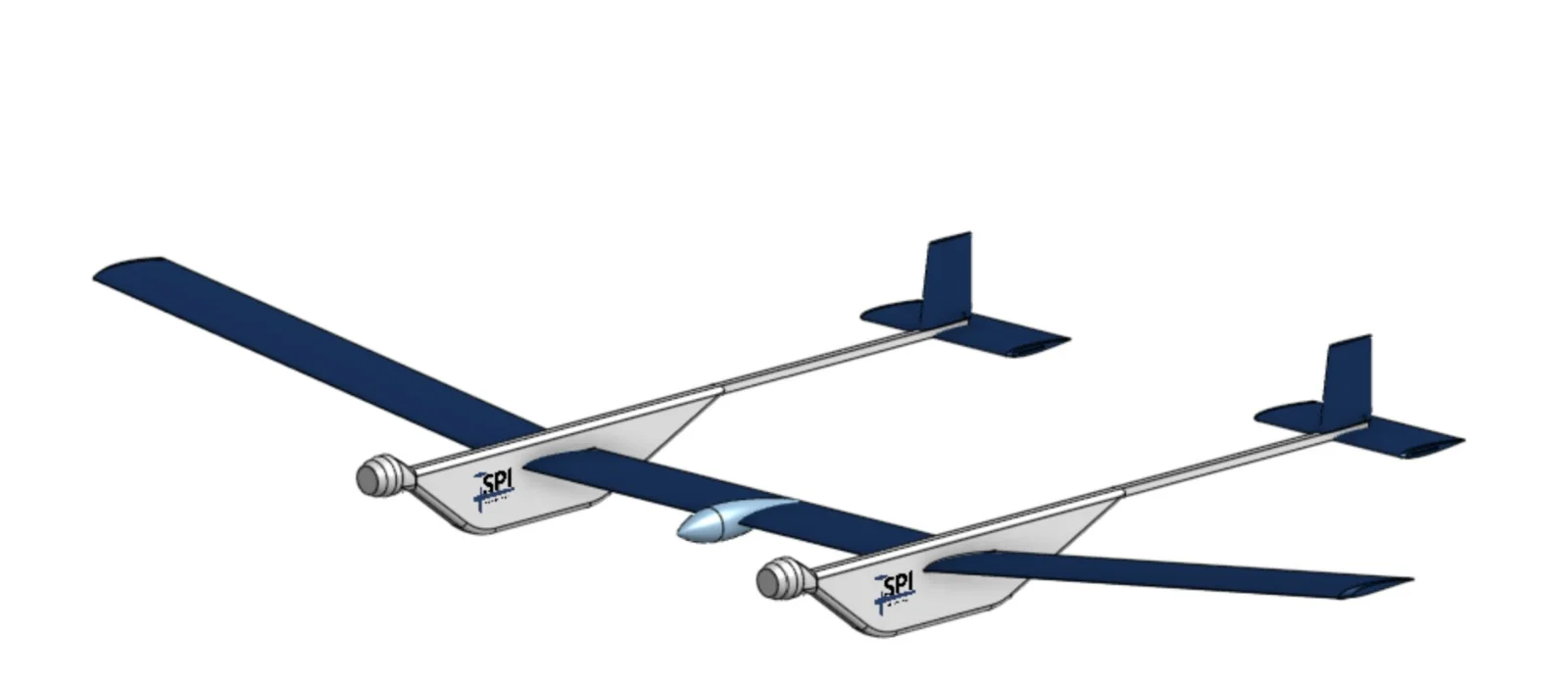
Twin-boom design · From our CAD
Take it
for a spin.
The twin-boom design, straight from our Onshape assembly. Drag to orbit, scroll or pinch to zoom, pull it apart, or move the sun across the wing.
Loading the 3D model…
- Span
- –
- Length
- –
The
demonstrator.
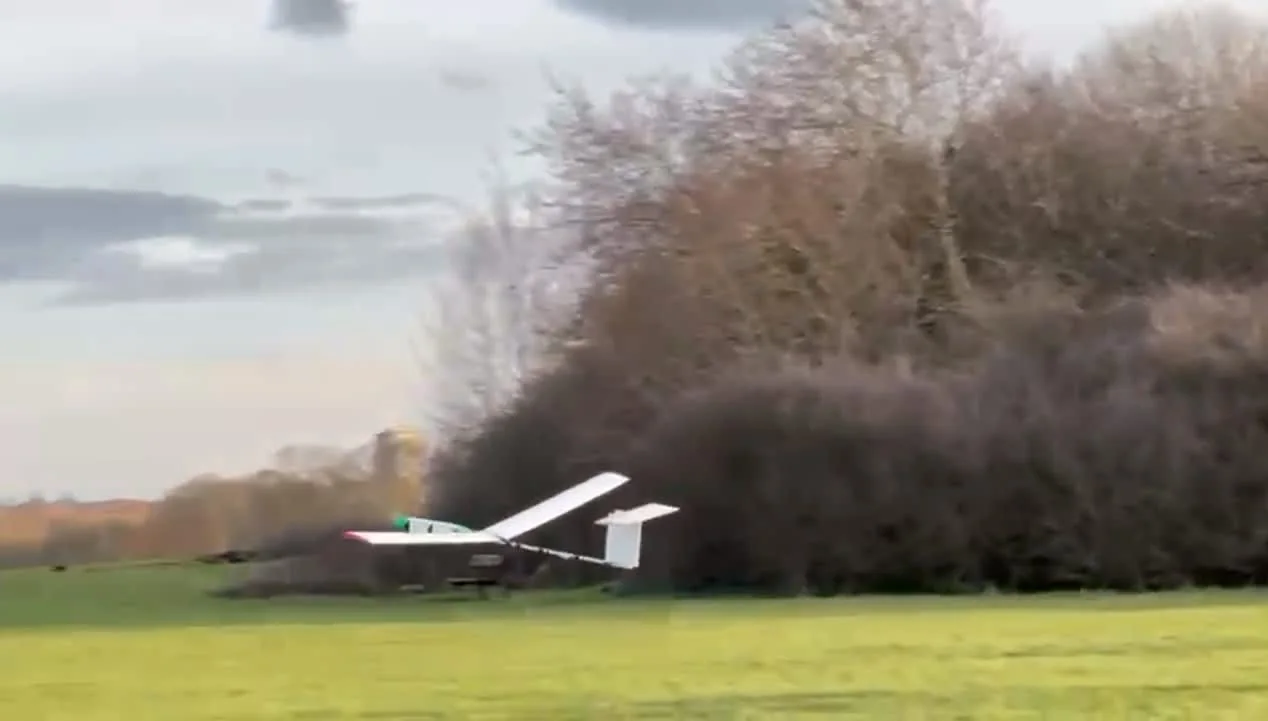
Our January 2026 demonstrator helped us refine launch procedure and flight controls for the next airframe.
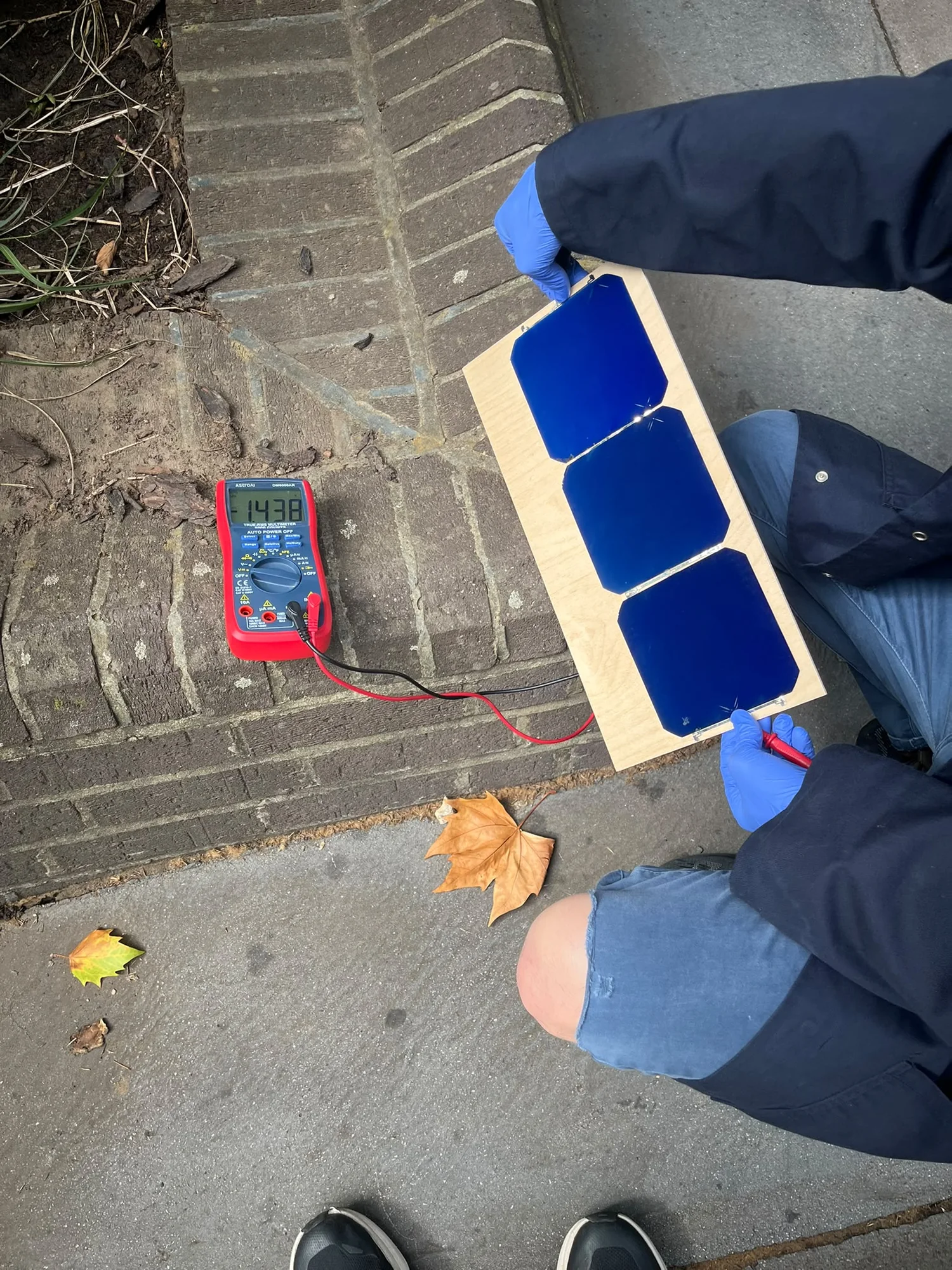
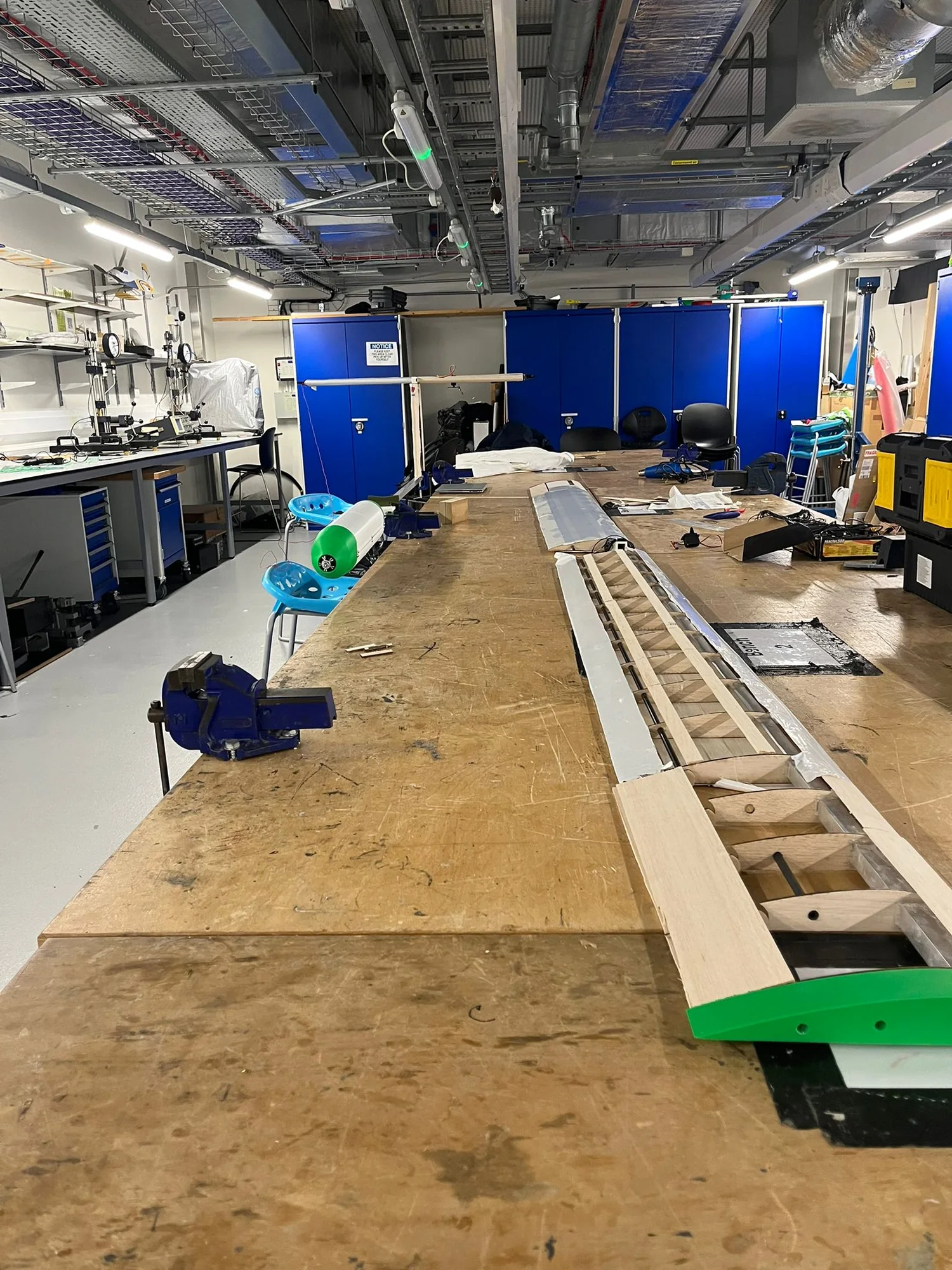
Aluminium and carbon fibre spars, balsa skin and 3D printed components keep the structure light. The first flight ran on batteries, with provision for solar cells.
It is hand-launched and lands on PLA skid pads instead of landing gear. Before it flew, we used SHARPy, the Department of Aeronautics’ aeroelastic solver, to predict how the wing would flex in flight.
Posted January 2026 · Wormwood Scrubs
Watch it
fly.
Footage from our demonstrator’s flight test, from our LinkedIn page.
Watch on LinkedIn ↗
Loads from LinkedIn
We study wing shape, drag and how the wing flexes in flight to reduce the power needed to stay airborne.
We design the airframe around stiffness, weight and assembly, from the wing spars to the joints between sections.
Solar collection, battery capacity and power demand have to work together to sustain flight through the night and recharge the following day.
We develop the systems that guide the aircraft and record its behaviour in flight, helping us compare its performance with our predictions.
2026 programme
Our next
aircraft.